
Let’s be honest—the moments right after a car accident are chaotic and terrifying. Your adrenaline is surging, your thoughts are racing, and it can be incredibly tough to think straight amidst the confusion and shock. But the actions you take in these first few minutes and hours are critical. They can have a major impact on your health, your safety, and your ability to get fair compensation for your injuries and damages down the line.
Table of Contents
That’s why knowing exactly what to do after a car accident in Austin is so important for protecting your rights. When you’re disoriented, having a clear set of steps to follow can make all the difference. Think of this as your step-by-step car accident guide for Austin drivers. We’ve designed it to help you handle the immediate aftermath and make sure you’re prepared for what comes next.
Step 1: Prioritize Safety and Check for Injuries
Before you do anything else, take a deep breath and assess the situation. Your safety and the well-being of others is priority number one. Rushing can lead to more mistakes or even further danger.
- Move to a Safe Location: If your car is still drivable and it’s safe to do so, move it over to the shoulder or a nearby parking lot. This is crucial for preventing a dangerous secondary collision, especially on busy Austin roads like I-35 or Mopac. If your vehicle cannot be moved, turn on your hazard lights immediately to alert other drivers.
- Check on Everyone Involved: First, check yourself and your passengers for any obvious injuries. Are you in pain? Are you bleeding? Then, if you’re able to move around safely, check on the people in the other vehicle(s). Ask clearly, “Is everyone okay?” or “Does anyone need an ambulance?”
- Call 911 Immediately: Even if the accident seems minor, calling 911 is a critical step. You need to report the crash and request an ambulance if anyone is hurt, even slightly. In Texas, having law enforcement come to the scene creates an official record of the event. Getting an official police report is an essential piece of evidence for your claim, establishing the time, place, and initial details of the incident.
Step 2: Document the Scene Thoroughly

Once you know everyone is safe and help is on the way, it’s time to start gathering information. Memories can fade and stories can change, but photographic evidence is objective. The evidence you collect right here at the scene will be incredibly valuable for any insurance claim or legal action down the road.
Exchange Information with the Other Driver(s)
Try to stay calm, polite, and business-like as you exchange the following details with every other driver involved:
- Full Name and Contact Information (phone number, address, email)
- Insurance Company and Policy Number
- Driver’s License Number and state of issue
- License Plate Number
- Make, Model, and Color of their Vehicle
A quick tip: Avoid talking about who was at fault or apologizing. Even a simple “I’m so sorry” can be twisted by an insurance adjuster and used as an admission of guilt. Just stick to the facts when you exchange information. To avoid errors, use your phone to take a clear picture of the other driver’s license and insurance card.
Take Photos and Videos
Your smartphone is your best tool right now. Use it to document everything you can before the scene is cleared. Take pictures and videos from different angles, making sure to capture:
- Damage to all the cars involved, both from a distance to show the overall impact and up close to detail specific dents, scratches, or broken parts.
- All license plates clearly.
- Any skid marks on the pavement, debris from the crash, or damage to public property like guardrails or signs.
- Nearby traffic signs, signals, and the general layout of the road, including lane markings and any visual obstructions.
- Any visible injuries you or your passengers might have, such as cuts, bruises, or scrapes.
- The current weather and road conditions (e.g., was it raining, was the sun causing a glare, were there potholes?).
Talk to Witnesses
If anyone saw what happened, politely ask for their name and phone number. Independent third-party witnesses have no stake in the outcome, so their account of the events can be a huge help for your case and can counter any inaccurate statements from the other driver.
Step 3: Report the Accident Officially
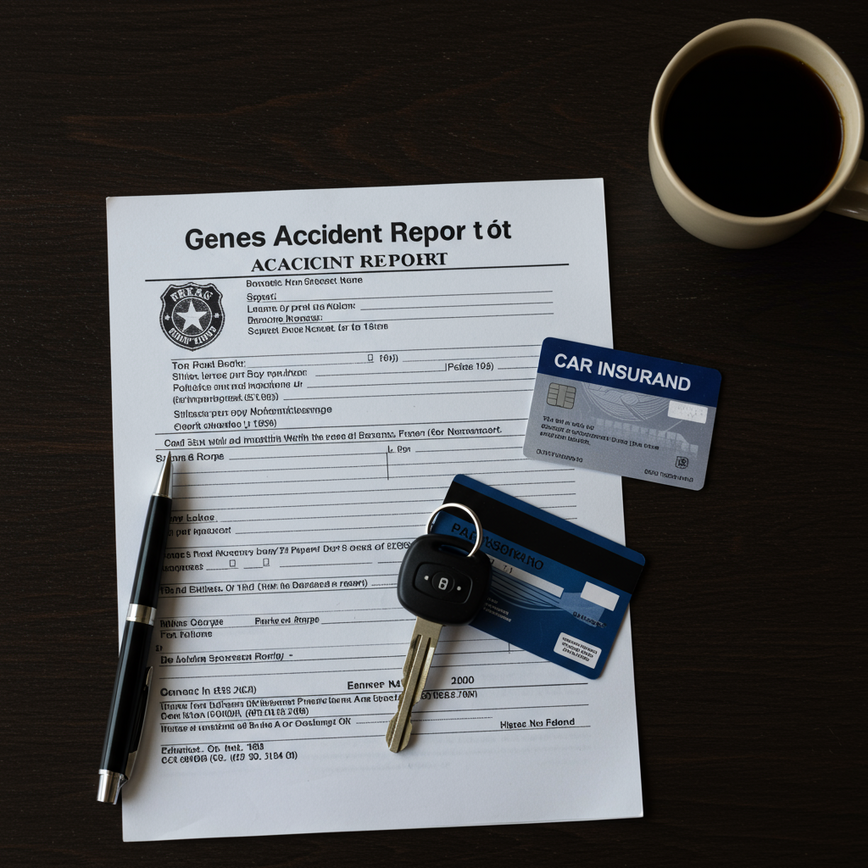
Making sure there’s an official record of the crash is one of the most critical steps after a car accident in Texas. This official documentation serves as the foundation for your insurance claim.
Cooperate with Law Enforcement
When the Austin police show up, give them a clear and factual account of what happened from your perspective. Describe what you saw, heard, and did. If you’re not sure about a detail, it’s okay to say so—don’t guess or speculate about things like speed or distance. Your honest statement will be used by the officer to create an official report.
How to Get Your Austin Accident Report
The police officer should provide you with a case number or an incident number before they leave the scene. After a few days, you can usually get a copy of your official Austin accident report from the Austin Police Department’s records division or through the TxDOT Crash Report Online Purchase System. This report is a vital document for both your insurance company and your attorney because it contains the officer’s diagrams, narrative, contributing factor codes, and contact information for all parties and witnesses.
Step 4: Seek Medical Attention (Even if You Feel Fine)
It’s amazing what adrenaline can hide. In the aftermath of a traumatic event like a car crash, your body’s “fight or flight” response kicks in, releasing hormones that can mask pain and injury. Many serious injuries from car accidents, like whiplash, concussions, or internal bleeding, may not show symptoms for hours or even days. It is absolutely crucial to get a medical evaluation as soon as possible, either at an emergency room or an urgent care clinic. This not only protects your health by catching potential issues early but also creates a crucial medical record that officially links your injuries to the crash. Delaying treatment can give an insurance company an opening to argue that your injuries weren’t caused by the accident.
Step 5: Notify Your Insurance Company
You should report the accident to your own insurance company as soon as you can, often within 24 hours. Just give them the basic facts of what happened: where and when the accident occurred, the other vehicles involved, and the police report number. You don’t have to give a recorded statement to the other driver’s insurance adjuster right away. Their goal is to get you to say something that minimizes their own client’s liability. In fact, it’s usually a good idea to speak with a lawyer before you provide any detailed statement to an opposing insurance company.
Step 6: Understand Your Legal Rights and Options
After an accident, you’ll be dealing with insurance adjusters who, frankly, don’t have your best interests in mind. Their job is to protect their company’s bottom line by paying out as little as possible on claims. They may seem friendly, but they are trained to look for ways to devalue or deny your claim. Before you even think about accepting a settlement offer, which may come surprisingly quickly, you need to understand the true extent of your damages and what your legal options are.
This is where having experienced legal help makes all the difference. At Joel A. Gordon & Associates, we’ve been helping Texans with complex injury claims since 1993. Our team can take over communications with the insurance companies, handle all the stressful paperwork, fully investigate your accident, and fight to make sure you get the compensation you deserve for all your medical bills, lost wages, and pain and suffering. Getting professional legal advice early can protect you from making costly mistakes, like accepting a lowball offer before you know the full cost of your future medical care. For a clear understanding of your rights and how to proceed, consider getting guidance from a dedicated Austin Personal Injury Lawyer.
Don’t Face the Aftermath Alone
The steps you need to take after a car crash in Austin can feel overwhelming, but you don’t have to go through it by yourself. Joel A. Gordon & Associates has earned a nationwide reputation for getting results, and our amazing client reviews show that we always put our clients first. With our 24/7 phone service, help is always just a call away. Contact us today for a free, no-obligation consultation to discuss your case. We’re here to listen and explain your options, with no pressure and no upfront fees.