What Surveillance Footage Can Reveal in Pedestrian Injury Cases
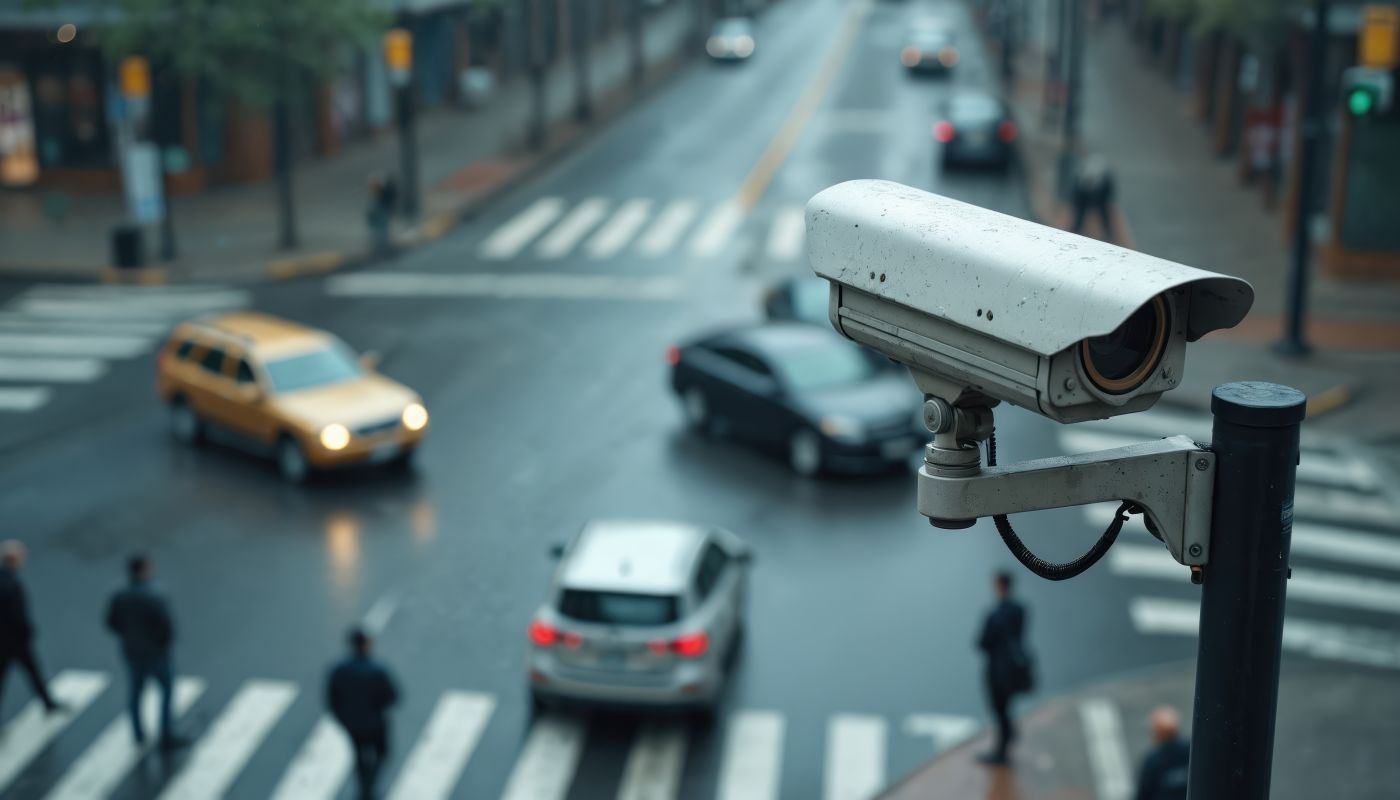
If a car hit you while you were crossing a Houston street, your story and the driver's may not align, and the insurance company will usually favor the version that costs it less. Surveillance footage can settle that dispute. Video from businesses, doorbells, buses, and dashcams can show who had the signal, how fast the driver was going, where you were standing, and what happened afterward. The catch is time: many camera systems record over old video within days or weeks, so footage that could support your claim may vanish long before anyone files a lawsuit.
At Joel A. Gordon & Associates, we help injured pedestrians in Houston locate cameras near the crash scene, preserve that footage, and use what it shows to hold the at-fault driver and their insurer accountable. If your crash happened recently, a free consultation is the fastest way to learn which recordings may still exist and how to protect them.
Good footage answers the questions that usually decide fault, often more reliably than memory or a hurried roadside statement. Depending on the camera's angle and quality, video may show:
The signal and crosswalk status: whether you had a "Walk" signal, whether the driver ran a red light, or whether you were inside a marked crosswalk.
Speed and braking: how quickly the vehicle approached, whether brake lights came on, and how much time the driver had to react.
Driver behavior: a rolling right turn, a car that never slowed, or a driver whose head was turned away from the road.
Visibility conditions: lighting, weather, glare, and whether parked cars or other obstacles blocked anyone's view.
The aftermath: whether the driver stopped, which matters in a hit-and-run, plus license plates, vehicle descriptions, and people who may have witnessed the crash.
That last point deserves attention. If the driver left, a few frames showing a plate number or a distinctive vehicle may be the only way to identify who was responsible.
The most useful video often comes from private cameras rather than government ones. In a city as spread out as Houston, a single intersection may be covered by a gas station, a strip-center storefront, an apartment complex gate, and a homeowner's doorbell, each recording from a different angle.
Vehicles carry cameras too. Rideshare drivers, delivery fleets, commercial trucks, and buses often run dashcams or onboard systems, and a car stopped at the light may have caught the whole thing. Police body and dash cameras usually record only the aftermath, but that can still document the scene, vehicle positions, and what the driver said.
Don't assume a traffic camera on a pole captured your crash. Some public cameras are used for live traffic monitoring and may not save video at all, so the existence of a camera is not the same as the existence of a recording. A quick walk of the area, or a look at it on a map, can turn up sources nobody thought to check.
Most business and home systems save video on a loop, automatically overwriting older footage when storage fills up. Depending on the system, that cycle may run anywhere from a few days to about a month. Texas generally gives you two years from the date of an injury to file a personal injury lawsuit, but the window to save video is usually far shorter than that filing deadline.
Texas courts also won't necessarily penalize a business for routine overwriting. In Brookshire Brothers, Ltd. v. Aldridge, a 2014 case involving store surveillance video recorded on a roughly 30-day cycle, the Texas Supreme Court held that a jury instruction about lost evidence is generally reserved for intentional concealment. Negligent loss can support that instruction only in rare cases where the other side is left without any meaningful way to prove its claim. In practice, that means relying on a court to fix the problem later is a poor substitute for preserving the video now.
The duty to preserve evidence generally turns on whether a party knew, or reasonably should have known, that a claim was likely. A prompt, specific written preservation request helps establish that notice. As part of our pedestrian accident services, we routinely send these requests to businesses, property owners, and vehicle owners, and we follow up to obtain copies before the footage cycles out.
In the meantime, a few steps can help:
Write down the businesses, homes, and vehicles near the crash location while the details are fresh.
Photograph any cameras you notice, along with their position relative to the street.
Save any video or photos taken on your phone or a bystander's phone, and keep the original files.
Avoid confronting property owners or posting about the crash on social media.
Video matters because, in Texas, the percentage of blame assigned to you directly controls what you can recover. Under the state's proportionate responsibility statute, you cannot recover damages if you are found more than 50 percent responsible, and your share of fault reduces any recovery. For example, if your damages total $100,000 and you are found 20 percent at fault, your recovery drops to $80,000. At 51 percent, it drops to nothing.
That is why insurers in pedestrian cases often argue the person on foot caused the crash. A common version is that you crossed mid-block. Texas law does require pedestrians crossing outside a marked crosswalk or an unmarked crosswalk at an intersection to yield to vehicles. However, drivers still have a legal duty to use due care to avoid hitting a pedestrian. Footage can show whether the driver had a clear view and enough time to stop, which can shift a large share of responsibility back where it belongs.
The reverse is also true. Without video, an adjuster may assume the worst about where you were and what you did, and a few percentage points can significantly change your claim's value.
The days right after a pedestrian crash are when footage is easiest to save and when you are least able to chase it down yourself. With over 30 years of experience, our Houston-based firm can locate cameras, send preservation requests, and gather the video, along with your medical records and the crash report. We will also help you coordinate medical care, negotiate with insurance companies, and file a solid claim.
Our attorney, Joel A. Gordon, has practiced law in Houston since 1993 and graduated from the Texas Tech University School of Law. When you hire us, you work directly with our attorneys, not a case manager. In addition to Houston, we serve clients throughout Austin, Dallas, Fort Worth, El Paso, and Arlington.
Your consultation is free, and you don't pay unless we win. If a driver hit you and you suspect a nearby camera caught it, contact our accident attorneys in Houston at (281) 943-5555 so we can preserve that footage before it's overwritten.